


How Jinyi Wall Radiator Bracket changes stability in heating setups
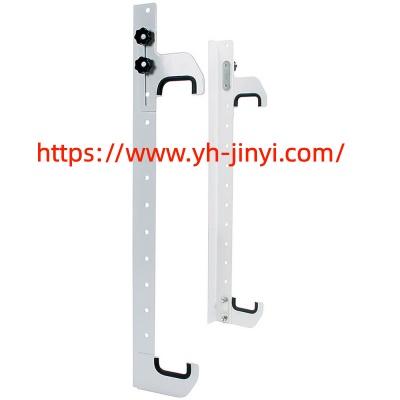
Jinyi Wall Radiator Bracket shows up in heating installations where long term stability matters more than how fast something gets mounted. Heating systems are always in motion at a small scale. They heat up, cool down, expand slightly, then settle again. This cycle never really stops, and over time it starts to test how well every fixed point is holding.
On real sites, nothing behaves perfectly. Surfaces look flat but are not always evenly supportive. Some contact areas carry more load than others, and that imbalance slowly affects positioning. Without a proper support structure, the mounted unit can begin to drift ever so slightly. Not in a way that you notice immediately, but enough to matter after weeks of operation.
There is also the quiet movement that comes from inside the system itself. Water flow, temperature change, and thermal expansion all create small repeated motion. It does not shake the system, but it keeps it active at a micro level. Over time, that constant activity can loosen a simple fixed point. A structured mounting approach helps absorb that background motion so it does not turn into gradual shift.
Installers usually notice the difference later rather than immediately. Once the system has been running for a while, a stable setup does not require repeated correction. Things stay where they were placed. That reduces return visits and keeps adjustments from becoming part of routine maintenance.
In multi room environments, the effect becomes easier to see. Different rooms behave differently depending on usage. Some heat cycles are frequent, some are light. Without consistent support, those differences can slowly translate into uneven positioning across installations. A stable mounting approach helps keep everything aligned without extra attention.
Maintenance teams benefit from that consistency too. When fixtures stay fixed, inspections become simpler. There is no need to question whether a small shift came from system pressure or from mounting looseness. That clarity makes it easier to focus on actual system performance instead of physical correction work.
From a design perspective, stability is not about making things rigid. It is about managing small movement so it does not build into something larger. Every heating system moves slightly. The goal is to keep that movement controlled and predictable over time.
Most end users never notice the mounting details, and that is usually the point. When everything stays in place quietly, the system feels more reliable without drawing attention to itself.
If you are checking how this type of setup fits into your own planning, you can view more here as a simple reference https://www.yh-jinyi.com/product/

 English
 Arabic
 French
 Spanish
 Portuguese
 Deutsch
 Turkish
 Italiano
 Russian
 Romaian
 Portuguese (Brazil)
 Greek
Greek