


Why Are Vertical Laminar Flow Hoods Preferred for Cleanrooms?
When you work in a cleanroom, maintaining a contamination-free environment is one of your highest priorities. Even microscopic airborne particles can compromise product quality, research accuracy, or manufacturing consistency. That's why selecting the right airflow system matters. A vertical laminar flow hood provides continuous, filtered airflow that helps protect sensitive materials from dust, microorganisms, and other contaminants.
Whether you operate a pharmaceutical laboratory, electronics manufacturing facility, biotechnology lab, or medical device production area, understanding why vertical laminar flow hoods are widely preferred can help you make better decisions for your workspace.
What Is a Vertical Laminar Flow Hood?
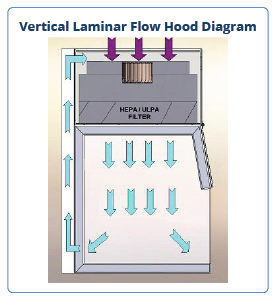
A vertical laminar flow hood is an enclosed workstation that directs HEPA- or ULPA-filtered air downward in a uniform vertical stream. This controlled airflow continuously removes airborne particles from the work area while preventing contaminants from settling on sensitive products.
Unlike horizontal airflow systems, the air moves from the top of the cabinet directly toward the work surface before exiting through front openings or exhaust pathways. This design provides reliable product protection while minimizing turbulence inside the workspace.
Why Do Cleanrooms Choose Vertical Laminar Flow Hoods?
Cleanrooms demand consistent environmental control. Vertical airflow systems help you maintain these strict cleanliness standards while supporting a wide range of laboratory and manufacturing processes.
Some of the biggest advantages include:
- Continuous ISO-class clean airflow
- Excellent particle control
- Reduced contamination risk
- Protection for delicate components
- Efficient workspace utilization
- Improved operator visibility
- Compatibility with multiple laboratory applications
These advantages make vertical laminar flow hoods a preferred solution across numerous industries.
How Does Vertical Airflow Improve Cleanroom Performance?
The biggest strength of vertical airflow is its ability to push airborne contaminants downward and away from the critical work zone.
Instead of allowing particles to circulate around your products, the filtered air creates a protective curtain that continuously flushes contaminants away from sensitive materials. This helps maintain consistent cleanliness throughout your operation.
If your work involves sterile assembly, sample preparation, semiconductor inspection, or precision manufacturing, this controlled airflow significantly improves process reliability.
Why Is Product Protection So Important?
Your products often require much stricter protection than your workspace itself.
A vertical laminar flow hood creates a clean environment around your materials by filtering airborne particles before they reach the work surface. This minimizes contamination that could affect:
- Laboratory samples
- Medical devices
- Electronic components
- Optical equipment
- Pharmaceutical products
- Biotechnology research
- Aerospace components
By reducing contamination risks, you improve quality, consistency, and production efficiency.
How Does HEPA Filtration Support Cleanroom Standards?
Most vertical laminar flow hoods use high-efficiency HEPA filters that capture at least 99.97% of particles measuring 0.3 microns. Some advanced systems also use ULPA filters for even finer particle removal.
This filtration helps maintain the cleanliness levels required in regulated environments while supporting compliance with industry standards.
For organizations seeking dependable contamination control, choosing a high-quality Vertical Laminar Flow Hood for ISO cleanroom contamination control provides reliable performance for demanding applications.
Why Are Vertical Designs Better for Larger Equipment?
Many cleanroom applications require bulky instruments, taller containers, or specialized laboratory equipment.
Since the airflow travels from top to bottom, vertical laminar flow hoods provide greater vertical clearance than many horizontal systems. This allows you to accommodate larger equipment without disrupting airflow patterns.
The downward airflow also reduces the likelihood of air bouncing directly toward sensitive materials.
Which Industries Benefit the Most?
Vertical laminar flow hoods are used in numerous industries where contamination control directly impacts product quality.
Common applications include:
- Pharmaceutical manufacturing
- Biotechnology laboratories
- Medical device assembly
- Semiconductor production
- Electronics manufacturing
- Optical component assembly
- University research laboratories
- Food testing facilities
- Aerospace manufacturing
Their versatility makes them one of the most widely used clean air workstations.
How Can You Improve Operational Efficiency?
An organized clean workspace contributes to higher productivity.
Vertical laminar flow hoods help you:
- Maintain uninterrupted workflows
- Reduce product rejection rates
- Minimize cleaning interruptions
- Increase process consistency
- Protect valuable research
- Improve manufacturing accuracy
These benefits help reduce downtime while supporting higher production quality.
What Features Should You Look For?
Not every laminar flow hood offers the same level of performance. Before making your investment, evaluate several important features.
Look for:
- HEPA or ULPA filtration
- Uniform vertical airflow
- Stainless steel work surfaces
- Energy-efficient blowers
- Low vibration operation
- Easy filter replacement
- Durable construction
- Adjustable lighting
- Ergonomic design
- Compliance with ISO cleanroom requirements
Choosing the right specifications ensures long-term performance.
Why Does Build Quality Matter?
A well-built laminar flow hood delivers consistent airflow over many years of operation.
High-quality materials resist corrosion, simplify cleaning, and maintain structural integrity even in demanding laboratory environments.
When selecting cleanroom equipment, working with an experienced manufacturer is equally important. CleaTech LLC designs cleanroom equipment engineered for durability, contamination control, and reliable laboratory performance across a wide range of industries.
How Can You Maximize Hood Performance?
Even the best equipment requires proper operation.
To maintain optimal performance:
- Replace filters on schedule.
- Keep the work surface uncluttered.
- Clean surfaces before each use.
- Avoid blocking airflow.
- Perform routine airflow testing.
- Minimize unnecessary movement.
- Follow cleanroom operating procedures.
- Schedule preventive maintenance.
Consistent maintenance helps preserve airflow quality while extending equipment life.
Final Thoughts
A vertical laminar flow hood is one of the most effective tools for protecting sensitive products inside controlled environments. Its downward HEPA-filtered airflow reduces airborne contamination, supports cleanroom compliance, improves workflow efficiency, and protects valuable materials across pharmaceutical, biotechnology, electronics, and research applications.
If you are planning to upgrade your cleanroom or select a reliable contamination-control solution, Contact us today to discuss the ideal vertical laminar flow hood for your specific application.
Frequently Asked Questions
Why is a vertical laminar flow hood preferred over a horizontal model?
Vertical airflow pushes filtered air downward, reducing particle accumulation on products while accommodating taller equipment and improving contamination control.
Does a vertical laminar flow hood protect the operator?
No. A vertical laminar flow hood primarily protects the product from contamination, not the operator from hazardous materials.
What industries commonly use vertical laminar flow hoods?
Pharmaceutical, biotechnology, electronics, semiconductor, medical device, aerospace, and research laboratories commonly rely on vertical laminar flow hoods.
How often should HEPA filters be replaced?
Replacement depends on usage and testing results, but regular inspections and scheduled maintenance help ensure consistent airflow performance.
Can a vertical laminar flow hood support ISO cleanroom requirements?
Yes. When properly installed and maintained, vertical laminar flow hoods help support ISO cleanroom environments by delivering continuous filtered airflow.
Original Source: https://laboratoryquipment.blogspot.com/2026/07/why-are-vertical-laminar-flow-hoods.html

 English
 Arabic
 French
 Spanish
 Portuguese
 Deutsch
 Turkish
 Dutch
Dutch
 Italiano
 Russian
 Romaian
 Portuguese (Brazil)