


Why Everyone's Wearing a 1977 Sweatshirt Right Now
Why Everyone's Wearing a 1977 Sweatshirt Right Now
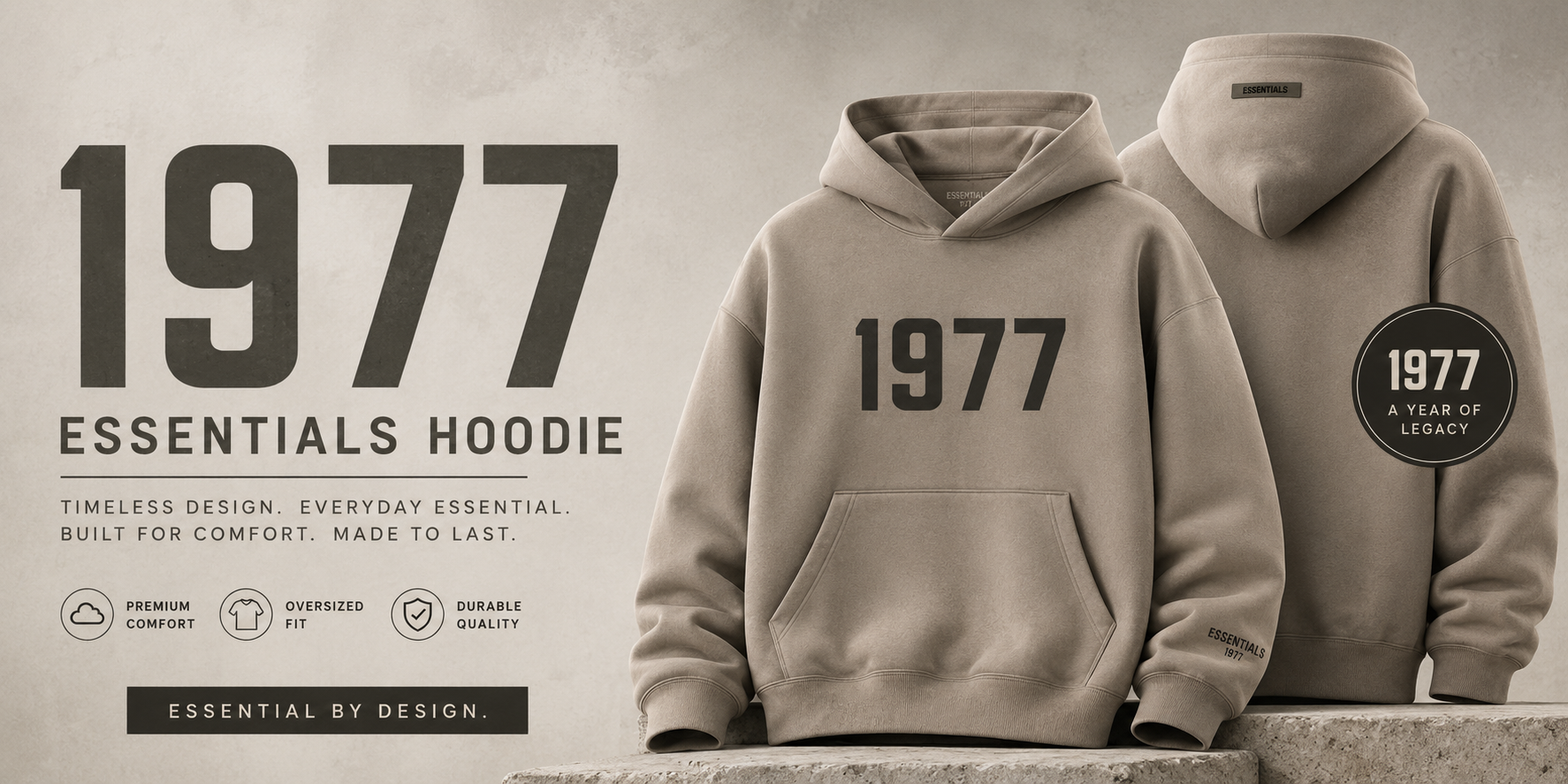
Walk into almost any streetwear shop this year and you'll see it: a plain essentials fear of god sweatshirt, oversized, with four numbers stamped across the chest 1977. No logo. No slogan. Just a year. And somehow that's enough to make people stop and ask questions.
Here's what's actually going on with this piece, why it's everywhere, and how to make it work in your own closet.
So What Does "1977" Actually Mean?
Short answer it depends who you ask. There's no rulebook here. A brand might slap that year on a garment for one reason; the person buying it might read into it completely differently. Most of the time it comes down to one of a few things: someone's birth year, a date that mattered, or just a general love for that decade's vibe.
Think about it this way a number feels more personal than a slogan. You can't fake a connection to a printed phrase the way you can quietly claim ownership over a year.
Fashion houses caught onto this once vintage-inspired design became a bigger movement. Slap a year on a hoodie and suddenly it reads as lived-in, worn, storied — even brand new off the rack.
People tend to connect with 1977 for reasons like:
-
It's literally when they were born
-
It marks when a parent or grandparent came into the world
-
It stands in for an era they just find interesting, decades later
-
It's shorthand for "I like old-school style"
-
It quietly nods to something personal that only they'd recognize
Multiply that by everyone wearing it, and you get a garment that means five different things to five different people — which, weirdly, is exactly why it works. It's not just apparel anymore. It's a low-key personal statement.
Three Big Reasons This Trend Isn't Going Anywhere
Nostalgia sells — even borrowed nostalgia. You don't need to have lived through 1977 to feel drawn to it. Plenty of buyers weren't even born yet, and they still gravitate toward the look. There's just something comforting about clothes that feel like they carry history, whether that history is real or aesthetic.
Simplicity is underrated. A bold number does more visually than most graphics manage. It's minimal, it's clean, and it doesn't try too hard — which, ironically, makes it try harder in the right direction.
Social proof moves fast. The moment a public figure or influencer gets photographed in something like this, it multiplies. One photo becomes a thousand recreations within days.
Add those together and you get a piece that resonates with teenagers discovering vintage style for the first time right alongside adults who genuinely remember the actual decade.
The Celebrity Effect
Let's be honest — a big chunk of any trend's momentum comes from who's photographed wearing it first. Once someone recognizable steps out in a piece like this, it stops being a niche find and starts becoming "the thing everyone wants."
Part of why it spreads so easily is that it's nearly foolproof to style. Throw it over jeans. Add sneakers. Maybe a jacket if it's cold. Done — no overthinking required. That kind of low-effort versatility is exactly what makes something shareable in the first place.
Every repost, every street-style shot, every casual Instagram photo adds fuel. That's the loop keeping this trend alive well past what you'd expect from a normal fashion cycle.
A Nod to an Actual Decade
Here's the thing 1977 essentials sweatshirts wasn't picked at random. It was a real cultural moment, a year that shaped music and film in ways people still reference today. Most people wearing the sweatshirt now have zero personal connection to that year, but that's almost beside the point. The number has become shorthand a stand-in for "classic," "timeless," "old-school cool."
Vintage-coded fashion in general has been climbing for a reason: fast fashion feels disposable, and people are tired of that. Clothes that seem to carry some kind of story even a borrowed one feel more worth keeping.
What this piece nails, specifically:
-
Barely-there design
-
Nostalgia, whether earned or aesthetic
-
A look that stays wearable, not costume-y
-
Room for the wearer to decide what it means
-
Appeal that spans generations, not just one age group
Why Numbers Work So Well on Clothes
This isn't new, really. Jerseys have used numbers forever. Varsity jackets too. There's something about a number that reads as identity without shouting for attention the way a big logo does.
A sweatshirt like this lets someone:
-
Say something about themselves without actually saying anything
-
Privately mark a year that matters
-
Give strangers a reason to ask
-
Signal an interest in retro style without spelling it out
-
Wear something meaningful with zero explanation required
Compare that to a shirt covered in text or branding it just hits different. Quieter, but somehow more personal.
How to Actually Wear One
This is honestly where the piece earns its popularity it's hard to get wrong.
For a normal day out: straight-leg jeans, clean white sneakers, a backpack if you need one. Minimal effort, still looks intentional.
Leaning into streetwear: cargo pants, chunkier sneakers, top it off with a beanie or cap for a rougher edge.
Cold-weather version: layer a denim or leather jacket over it, dark jeans underneath, boots to finish. Instantly warmer, still on-theme.
Athleisure mode: joggers, running shoes, keep everything else minimal so the sweatshirt stays the focal point.
Four completely different looks, one sweatshirt. That's the whole appeal in a nutshell.
Is There a Hidden Meaning? Not Really.
People love to ask if there's some deeper symbolism buried in the number. Truthfully no. There's no secret code here. What it means is whatever the wearer decides it means.
Maybe it's their actual birth year. Maybe they just like the retro typography and couldn't care less about the decade itself. Both are equally valid, and that flexibility is probably the single biggest reason this trend has had staying power instead of fizzling out after one season.
Bottom Line
A 1977 sweatshirt isn't just another number printed on cotton. It's simple on the surface, but it carries whatever the wearer wants it to carry — nostalgia, identity, a personal date, or just an appreciation for retro style. None of that needs explaining out loud.
Trends come and go fast these days, but pieces like this stick around because they communicate something without a single word. At the end of the day, the number means whatever the person wearing it decides — and that's exactly why it keeps selling.
Frequently asked questions
What does a 1977 sweatshirt actually mean?
Usually a birth year, a meaningful date, or just an appreciation for vintage style. It changes person to person.
Why did this become such a big trend?
A combination of retro appeal, celebrity visibility, and the emotional pull people feel toward meaningful numbers.
Is there some official symbolism behind 1977?
No universal meaning exists. Most people wear it for personal reasons or simply because they like the look.

 English
 Arabic
 French
 Spanish
 Portuguese
 Deutsch
 Turkish
 Dutch
Dutch
 Italiano
 Romaian
 Portuguese (Brazil)
 Greek
Greek