

Q-Switched Laser for Dark Spots: A Dermatologist’s Perspective
Dark spots are one of the most common skin concerns affecting people of all ages. Whether caused by sun exposure, acne, aging, or hormonal changes, these areas of excess pigmentation can make the complexion appear uneven and dull. Modern dermatology offers several treatment options, and Q-switched Laser Treatment Riyadh has become one of the most effective choices for targeting unwanted pigmentation with precision. From a dermatologist’s perspective, understanding how this technology works and who benefits most from it is essential for achieving safe, natural-looking results.
What Are Dark Spots?:
Dark spots, also known as hyperpigmentation, develop when certain areas of the skin produce excess melanin. While they are generally harmless, they often become a cosmetic concern due to their noticeable appearance. The most common causes include:
- Sun damage and UV exposure.
- Post-inflammatory pigmentation after acne.
- Hormonal pigmentation such as melasma.
- Age-related pigmentation.
- Skin injuries or irritation.
- Certain medications that increase pigmentation.
Identifying the underlying cause helps determine the most effective treatment approach.
How Q-Switched Laser Technology Works:
Q-switched laser technology delivers extremely short bursts of high-energy light that specifically target melanin without causing significant damage to surrounding tissues. The laser energy breaks pigment into microscopic particles, allowing the body's natural immune system to gradually eliminate them over time. This selective targeting makes Q-switched lasers highly effective for treating dark spots while preserving healthy skin.
Why Dermatologists Recommend Q-Switched Laser for Dark Spots:
Dermatologists often recommend Q-switched lasers because they provide precise pigment targeting with relatively minimal recovery time. Unlike treatments that affect the entire skin surface, this laser focuses directly on excess melanin, making it suitable for various pigmentation concerns. Individuals considering Q-switched Laser Treatment Riyadh frequently choose this option because it combines effectiveness with a non-invasive treatment approach. Its ability to improve skin clarity gradually also contributes to natural-looking cosmetic enhancement.
Types of Dark Spots That Respond Well:
Not every pigmentation concern responds in the same way, but several common forms of hyperpigmentation typically improve with Q-switched laser treatment. These include:
- Sunspots.
- Age spots.
- Freckles.
- Post-inflammatory hyperpigmentation.
- Mild pigmentation caused by previous skin irritation.
- Certain superficial pigment irregularities.
A thorough skin assessment helps determine whether laser treatment is the most appropriate option.
Benefits of Q-Switched Laser Treatment:
Q-switched laser technology offers numerous advantages for patients seeking clearer, more even-toned skin. Some of its key benefits include:
- Precise treatment of excess pigmentation.
- Improvement in overall skin brightness.
- Reduction in visible dark spots.
- Minimal downtime after treatment.
- Non-invasive procedure with no surgery.
- Gradual enhancement of skin clarity and radiance.
These benefits make it a popular treatment choice for pigmentation correction.
What to Expect During the Procedure?:
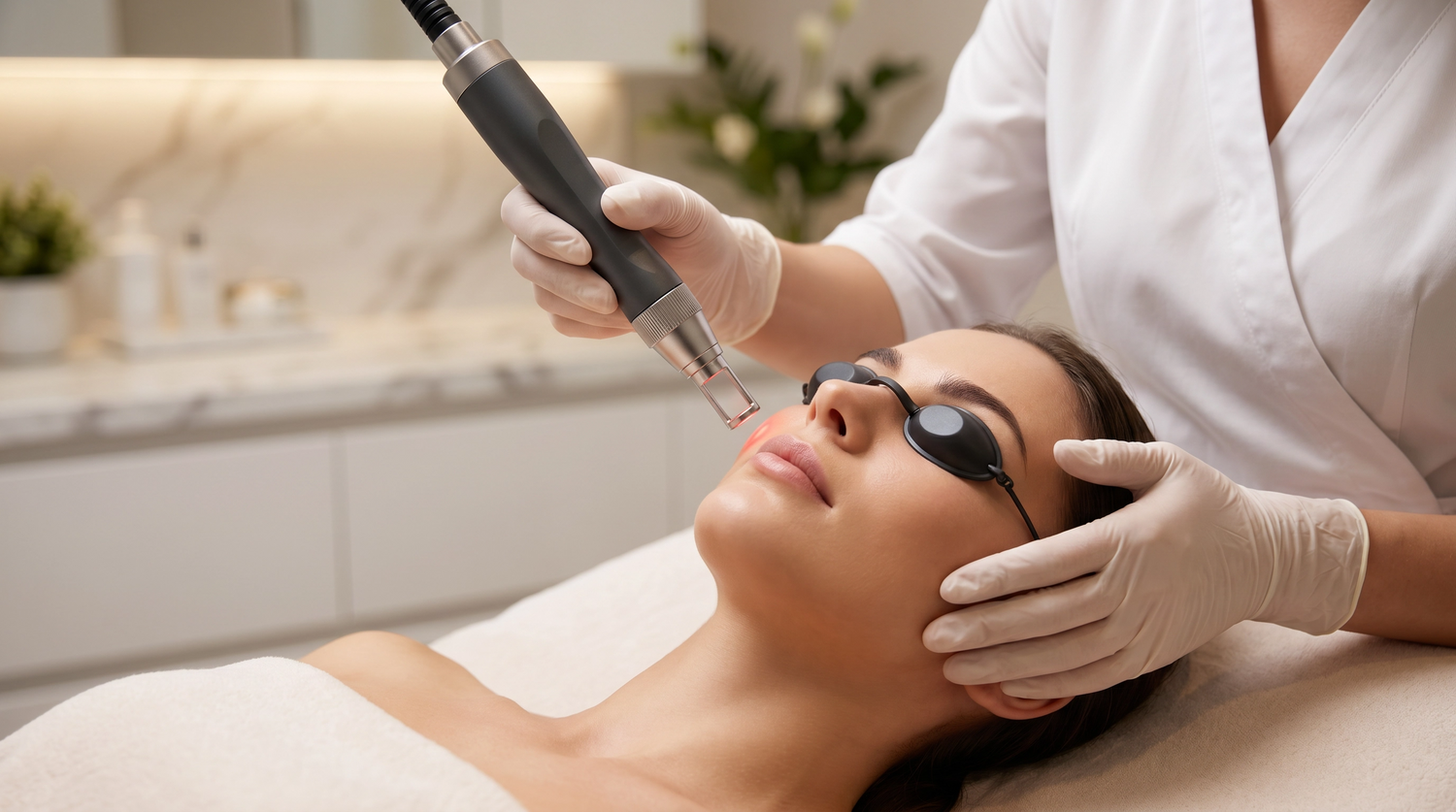
The procedure is typically straightforward and relatively quick. After cleansing the treatment area, protective eyewear is provided before the laser delivers rapid pulses to the targeted pigmentation. Patients usually describe the sensation as a mild snapping feeling against the skin. Depending on the size and number of dark spots being treated, sessions generally last between 10 and 30 minutes. Mild redness may appear afterward but usually subsides within a short period.
Side Effects and Recovery:
Q-switched laser treatment is generally well tolerated, although temporary side effects may occur as part of the normal healing process. These effects are usually mild and improve within several days. Common reactions include:
- Mild redness.
- Slight swelling.
- Temporary warmth.
- Darkening of treated pigmentation before fading.
- Mild dryness or peeling.
- Temporary skin sensitivity.
Following proper aftercare helps support comfortable healing and reduces the likelihood of complications.
Aftercare Tips Recommended by Dermatologists:
Dermatologists emphasize the importance of consistent aftercare to maximize treatment success and maintain healthy skin. Recommended aftercare practices include:
- Wearing broad-spectrum sunscreen daily.
- Avoiding direct sun exposure during recovery.
- Using gentle cleansers and moisturizers.
- Keeping the skin well hydrated.
- Avoiding harsh exfoliants temporarily.
- Following all personalized skincare instructions.
These habits help protect treated skin while reducing the risk of future pigmentation.
How Many Sessions Are Usually Needed?:
The number of treatment sessions varies according to pigmentation depth, skin type, and treatment goals. While some superficial dark spots respond after only a few sessions, more stubborn pigmentation often requires additional treatments. Factors influencing treatment duration include:
- Severity of pigmentation.
- Skin healing response.
- Underlying cause of dark spots.
- Consistency with sun protection.
- Individual cosmetic expectations.
A customized treatment plan provides the most effective pathway to gradual improvement.
Long-Term Maintenance for Clearer Skin:
Although Q-switched laser treatment effectively removes existing pigmentation, maintaining results requires ongoing skincare and sun protection. Continued exposure to ultraviolet radiation can stimulate new pigment formation, making preventive care essential. Daily sunscreen use, a balanced skincare routine, and periodic skin evaluations help preserve treatment results and maintain a brighter, more even complexion over time.
Final Thoughts
From a dermatologist's perspective, Q-switched laser technology remains one of the most effective non-invasive treatments for reducing dark spots and improving overall skin tone. Its ability to precisely target excess melanin while preserving surrounding tissue makes it a valuable option for many pigmentation concerns. Individuals considering Q-switched Laser Treatment Riyadh should undergo a professional skin assessment to determine the cause of their dark spots and develop a personalized treatment plan. With realistic expectations, proper aftercare, and consistent sun protection, this advanced laser technology can deliver noticeable, long-lasting improvements in skin clarity and appearance.

 English
 French
 Spanish
 Portuguese
 Deutsch
 Turkish
 Dutch
Dutch
 Italiano
 Russian
 Romaian
 Portuguese (Brazil)
 Greek
Greek